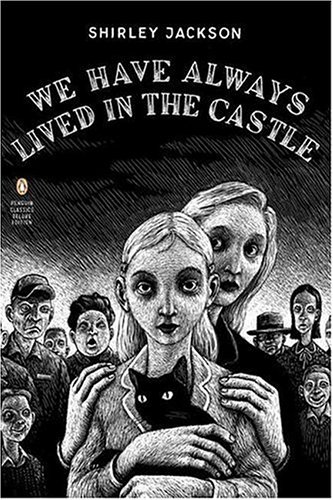
 I read a review of this novel written by Joyce Carol Oates and wanted to use some of her comments in my dissertation, so I figured I should actually read the novel as well. The author of the introduction to this edition considers this to be Jackson's masterpiece. I haven't read any of Jackson's other work, so I can't venture to express an opinion on this statement. However, I can say that I thoroughly enjoyed reading the adventures of Merricat, her sister Constance and their uncle Julien. Delightfully disturbing! Or perhaps disturbingly delightful! I'm not exactly sure how to qualify it. Though certain elements of the plot are rather disturbing, the reading experience is an altogether delightful one!
Merricat, Constance and Julien have lead a reclusive existence in the Blackwood family home since the rest of their family died of poisoning several years previous. They make up a proud, tight-knit, well-ordered family unit inhospitable to the eyes of prying strangers. When the family poisoning occured, police suspected Constance because she typically prepared the meals, however, the young, impetuous Merricat with her proclivity for proclaiming her knowledge of deadly poisons, her tendency towards witchcraft and her spiteful nature seems like a much more likely culprit. In spite of this family tragedy looming in their past, Merricat considers the three remaining Blackwoods to be living a perfectly enjoyable harmonious existence and has absolutely no desire to see it change. Things start spiralling out of control when a distant cousin shows up one day, wanting to change things, being rude to Uncle Julien and insinuating that he might like to marry Constance.
Despite the turbulence caused by cousin Charles and a violent altercation with the townspeople, Merricat and Constance survive, retreating into an even more reclusive existence, though one with which they seem perfectly happy. Jackson's text ultimately reminds us how a fear of change and confrontation can lead to the rationalization of horrors and a potentially harmful acceptance, or perhaps embrace, of stasis, all the more insidious as it is presented as so pleasant to the two protagonists.
Wednesday, February 17, 2010
"We Have Always Lived In The Castle" by Shirley Jackson (1962)

Subscribe to:
Post Comments (Atom)
0 comments:
Post a Comment