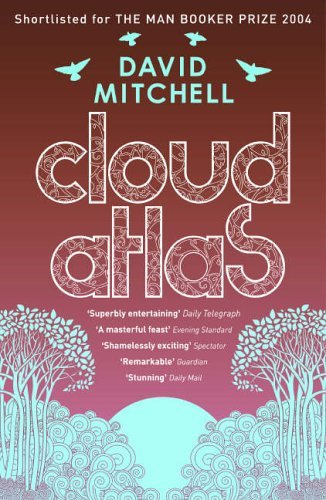
 This novel made Roy's favorite books of 2012 list, which prompted me to purchase several as gifts for friends and then borrow it back from one of them once she had finished it. It took me awhile to slog through the 529 pages, but after lots of fits and starts, I finally made it. I don't think this necessarily has anything to do with the inherent quality of the writing. The author's ability to switch between styles and formats is impressive. However, this did bother me a bit in the first half of the book. Every time a new section, and a new storyline, starts, you have to adapt to a new fictional style. The effect is a bit like reading a short story collection. Just as you start to get comfortable with one thing, it's over and something entirely new begins. In addition to the literary prowess, Cloud Atlas is quite a feat of the imagination. Has anyone seen the movie? A student of mine said it was excellent, but I haven't seen it myself. Roy wrote a comprehensive review of the novel with which I concur and which I'm grateful for as I don't have the energy to do so. I'll just end by saying I found the moralizing tone of the novel's close slightly disappointing. I guess I'd prefer to figure out for myself rather than be told that the whole point of the novel is to encourage those rare instances of pure goodness that do occur in humans even though they often appear to be drowning in a sea of negative human impulses.
Friday, October 25, 2013
"Cloud Atlas" by David Mitchell

Subscribe to:
Post Comments (Atom)
4 comments:
For me, the moralizing and optimism of Adam Ewing's final paragraphs is significantly offset by the dark future that we have, strangely, read of earlier.
How to think about this paradox is one of the questions I am left with.
Tom & I both found the movie interesting. He followed the actors & characters through the changing roles better than I did. I was less confused once he explained what was going on--and was glad I'd watched the movie despite the confusion.
Hmmm ... I'm not sure the dark future offsets the moralizing (which I see more as statement of fact than proclamation of optimism). I think it is meant to pertain equally to all the storylines.
Just re-read the ending, because Nicole happened to be re-packing the box containing my copy. It has far less optimism than I remembered, but there's still a little, on the part of Adam Ewing, at least.
I agree that Mitchell does sort of tip his hand regarding the themes of the book, but I still find it thought-provoking, structurally, because he's placed it in a text that all the nested stories had access to—all that wisdom just sitting there waiting to be recognized—, but only partly, because Frobisher couldn't find the second half at first.
Post a Comment