How the World Became Modern
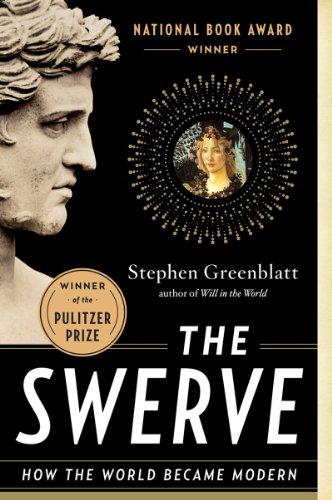 I was casting about for something new to read on my Kindle after finishing Redshirts, procrastinating starting Far from the Madding Crowd, and I happened upon this in an interview of Tim O'Reilly in my Google+ feed. It's about the history of books. Sounds interesting enough.
It's about Renaissance humanists in the early 15th century and their efforts to recover classical works hidden away for a thousand years or more in the monasteries of Europe. And, in particular, one Poggio Bracciolini and his trip to Alsace (probably), where he discovered a copy of De rerum natura (On the Nature of Things), a philosophical poem by Lucretius from the first century B.C.
Lucretius was an adherent of Epicurus, a 3rd century B.C. Greek philosopher. Because very little of Epicurus' own writings have been found, De rerum natura is an important source of Epicureanism, in spite of the centuries between them.
There are chapters in Swerve devoted to the life of Poggio, what we know about Lucretius, and in turn Epicurus. Also how the Catholic church recast Epicurus as decadent in an attempt to hold his philosophy at bay.
The rediscovery of Lucretius, and through him, Epicurus, influenced many downstream thinkers, including Thomas More in the early 16th century and Thomas Jefferson in the late 18th. Greenblatt seems to want to give it credit for a great deal. It's possible to draw eerie parallels between Epicureanism and 20th century physics, but I'm skeptical that 20th century discoveries would not have been made had De rerum natura been scraped and written over before Poggio found it.
Still, whatever the limits of this text's influence, I am glad that Poggio and others like him took it upon themselves to preserve texts during those years before the printing press when humanity and all nature seemed bent upon their destruction. It saddens me to think about all the lost words.
Monday, January 21, 2013
The Swerve by Stephen Greenblatt (2011)

Subscribe to:
Post Comments (Atom)
0 comments:
Post a Comment